
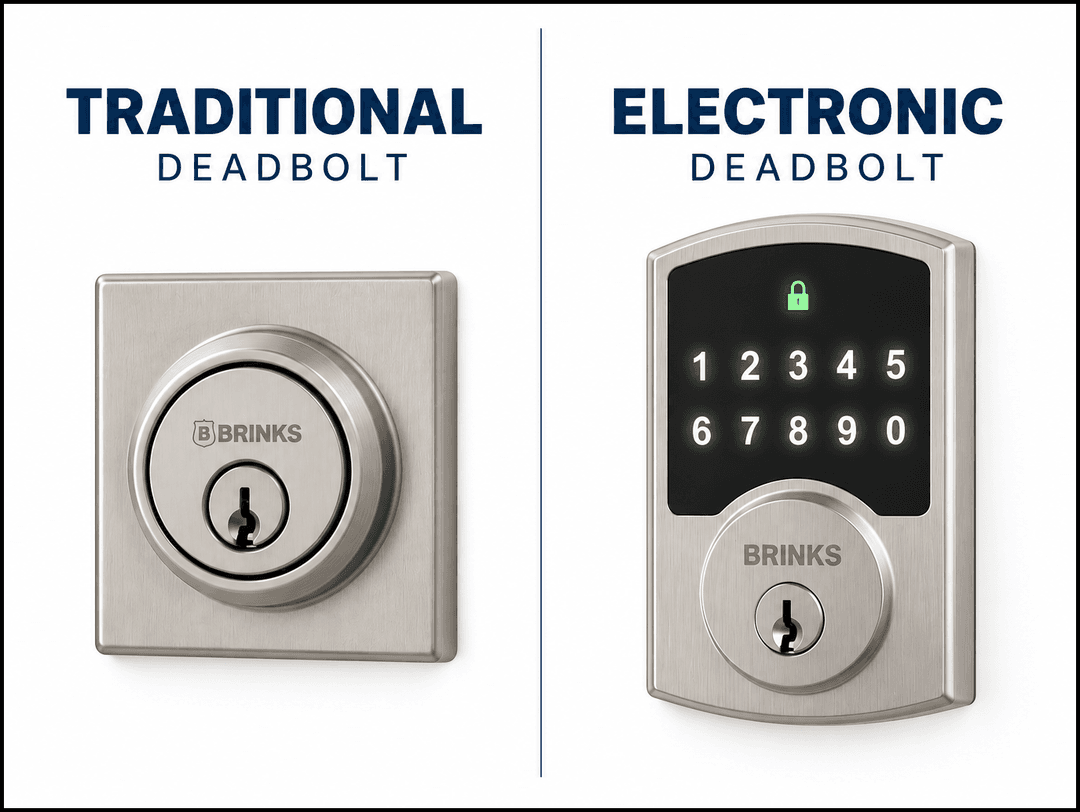
Keypad Lock vs. Traditional Keyed Lock: Which Is Right for You?
A Homeowner's Guide to Choosing the Best Lock for Your Lifestyle
09/23/26
When it's time to replace your front door lock, one of the biggest decisions is whether to choose a traditional keyed lock or a keypad lock.
Both offer dependable security, but they solve different problems. A traditional lock is simple, familiar, and maintenance-free, while a keypad lock adds convenience by letting you unlock your door with a personal code instead of a key.
So which is right for your home?
This guide compares the advantages of each so you can choose the lock that best fits your lifestyle, family, or property.
At a Glance
| Traditional Keyed Lock | Keypad Lock |
|---|---|
| Uses a physical key | Unlocks with a PIN code |
| No batteries required | Battery powered |
| Simple and familiar | Convenient keyless entry |
| Lower upfront cost | More features and flexibility |
| Ideal for homeowners who prefer traditional access | Ideal for families, landlords, vacation rentals, and busy households |
| Recommended Brinks Product Contemporary Single Cylinder Deadbolt E2402-122 | Recommended Brinks Product Electronic Touchpad Deadbolt with PRO-GUARD™, Transitional 4391-119 |
Traditional Keyed Locks
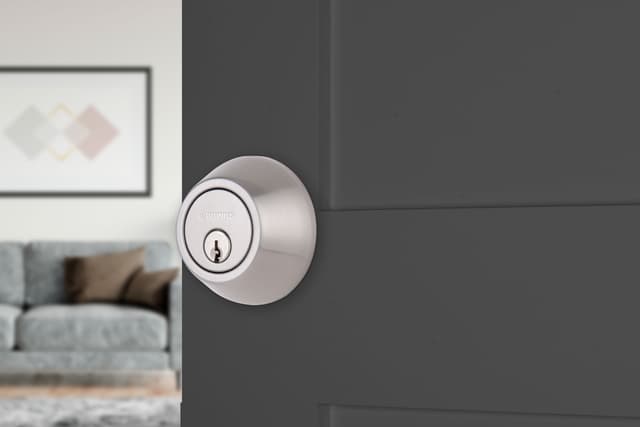
For decades, keyed locks have been the standard for residential security—and for good reason.
A quality deadbolt paired with a keyed entry knob or lever provides reliable protection with minimal maintenance.
No Batteries Required
A traditional keyed lock is always ready to use. Since it doesn't rely on batteries or electronics, there's no need to worry about replacing batteries or monitoring power levels.
Simple Operation
Anyone can use a key, making traditional locks an easy choice for households that prefer familiar hardware with no additional setup or programming.
Lower Initial Cost
Keyed locks are typically less expensive than electronic locks while still providing excellent residential security.
Proven Reliability
With fewer electronic components, traditional locks are an excellent option for homeowners who prefer mechanical simplicity.
Keypad Locks
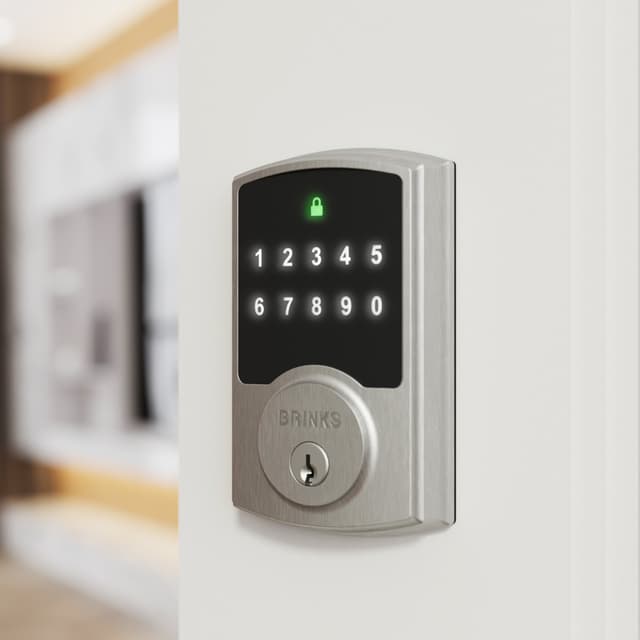
Keypad locks replace—or supplement—the traditional key with a numeric access code.
Instead of reaching for a key, simply enter your PIN to unlock the door.
Many Brinks keypad locks also include a traditional key override, providing an additional way to enter if needed.
No More Hiding Spare Keys
One of the biggest benefits of a keypad lock is eliminating the need to hide a spare key under a mat or flowerpot.
Family members simply use their code to enter.
Easy Access for Family Members
Kids coming home from school, teenagers, dog walkers, or trusted neighbors don't need their own physical key.
Simply share the code.
Convenient for Guests
Hosting friends or relatives?
Rather than making extra copies of keys, provide a temporary access code that can be changed later if desired.
Great for Rental Properties
Landlords and short-term rental hosts appreciate keypad locks because access codes can be updated between tenants or guests, reducing the need to collect or replace physical keys.
No Lost Keys
If someone forgets their key, they can still enter using the code.
This reduces lockouts caused by misplaced keys.
Comparing the Most Important Factors
Convenience
Winner: Keypad Lock
If convenience is your priority, keypad locks have the advantage.
There's no key to carry, lose, or copy.
Security
Winner: Depends on the Lock and Installation
A properly installed deadbolt provides excellent physical security whether it's operated by a key or a keypad.
The level of security depends more on the quality of the lock, proper installation, and secure door construction than on how the lock is unlocked.
Access Sharing
Winner: Keypad Lock
Sharing a code is much easier than making duplicate keys.
This makes keypad locks especially useful for:
- Families
- House cleaners
- Dog walkers
- Contractors
- Vacation rentals
- Airbnb hosts
- Property managers
Battery Maintenance
Winner: Traditional Keyed Lock
Traditional locks require virtually no ongoing maintenance beyond occasional lubrication.
Keypad locks operate on batteries that should be replaced periodically. Many models provide low-battery warnings well before replacement is needed, and Brinks keypad locks include a key override for emergency access.
Installation
Winner: Tie
Most modern keypad locks are designed to fit standard residential door preparations and can typically be installed using basic household tools—much like replacing a traditional deadbolt.
Whether you're installing a keypad lock or a keyed deadbolt, always follow the manufacturer's instructions to ensure proper fit and reliable operation.
Cost
Winner: Traditional Keyed Lock
Traditional keyed locks generally have a lower purchase price.
However, many homeowners find the added convenience of keypad entry well worth the additional investment.
Which Lock Is Best for Your Situation?
Choose a Traditional Keyed Lock If You:
- Prefer simple mechanical hardware
- Don't mind carrying keys
- Want the lowest maintenance option
- Are replacing existing hardware on a budget
- Need dependable everyday residential security
Choose a Keypad Lock If You:
- Have children coming home after school
- Frequently lose your keys
- Want keyless convenience
- Need to share access with multiple people
- Own rental property
- Manage vacation rentals
- Frequently host guests
- Want to eliminate spare keys
Frequently Asked Questions
- Are keypad locks secure?
- Yes. A quality keypad deadbolt provides strong residential security when properly installed. Always choose a lock that meets recognized residential security standards and install it according to the manufacturer's instructions.
- What happens if the battery dies?
- Most keypad locks provide a low-battery warning well before replacement is needed. Brinks keypad locks also include a traditional key override, allowing you to unlock the door with a physical key if the batteries are depleted.
- Can I still use a key?
- Yes. Brinks keypad locks include both keypad entry and a traditional key cylinder, giving you the flexibility to use either method.
- Can I change the access code?
- Yes. One of the biggest advantages of a keypad lock is the ability to change your entry code whenever needed. This is especially useful after moving into a new home, ending a service relationship, or between rental guests.
- Are keypad locks difficult to install?
- Most are designed to replace a standard residential deadbolt and can typically be installed with basic tools in about the same amount of time as replacing a traditional lock.
- Are all electronic locks smart locks?
- No. An electronic lock is not necessarily a smart lock. Brinks keypad locks offer standalone electronic convenience—PIN-code access with a mechanical key backup—without requiring internet connectivity, accounts, or smartphone integration.
The Bottom Line
Both traditional keyed locks and keypad locks offer dependable security when properly installed. The best choice comes down to how you use your home.
If you value simplicity, proven reliability, and minimal maintenance, a traditional keyed lock is an excellent option.
If convenience, flexible access, and eliminating physical keys are high on your list, a keypad lock can make everyday life easier—especially for busy families, landlords, vacation rental hosts, and property managers.
No matter which option you choose, pairing a quality lock with a solid door, reinforced frame, and proper installation helps create a safer, more secure home.