Best Lock for a Storage Unit
How to Choose the Right Padlock to Protect Your Belongings
09/23/26
Key Takeaways: Choosing a Padlock for Your Storage Unit
- Look for a Security-Focused Design
- Padlocks with limited shackle exposure can make it more difficult for thieves to access the shackle with cutting tools.
- Consider Shackle Strength
- Hardened steel shackles provide greater resistance to cutting and other forms of physical attack than standard steel.
- Choose the Right Size and Fit
- A padlock that fits securely within the storage unit's latch can limit access to the lock and make it harder for tools to gain leverage.
- Match the Lock to What You're Protecting
- The more valuable the contents of your storage unit, the more important it is to choose a padlock with a higher level of security and physical protection.
- Don't Overlook the Lock Body
- The shackle isn't the only part of the padlock that matters. A strong lock body and durable internal components can provide additional protection against physical attacks.
Whether you're storing family heirlooms, business inventory, seasonal decorations, or furniture during a move, your storage unit is only as secure as the lock protecting it. While most self-storage facilities offer perimeter fencing, gated access, surveillance cameras, and onsite management, your padlock remains the first line of defense against theft.
Not all padlocks provide the same level of protection. Some are designed specifically for self-storage units, while others are better suited for gates, sheds, or toolboxes. Understanding the differences can help you choose the right lock for your storage unit and protect what matters most.
What Makes a Good Storage Unit Lock?
Storage units present unique security challenges. Your lock will likely remain outdoors for months or even years, exposed to rain, heat, dust, humidity, and changing temperatures. It also becomes the most accessible point for anyone attempting unauthorized entry.
The best storage unit lock should provide:
- High resistance to bolt cutters and crow bars
- Protection against picking and drilling
- Minimal exposed shackle
- Corrosion and weather resistance
- Durable construction that stands up to long-term outdoor exposure
- Compatibility with your storage facility's latch system
- Convenient lock options, including keyed and resettable combination discus locks
While convenience matters, security should always come first—especially if you're storing valuables, irreplaceable personal items, or important business equipment.
Understanding Storage Unit Lock Types
| Lock type | Best fit | Key consideration |
|---|---|---|
| Discus | Many standard self-storage units | Minimal exposed shackle; confirm latch fit |
| Shielded-shackle | Applications requiring additional shackle protection | Must be compatible with unit hardware |
| Standard padlock | Units where other designs do not fit | Choose shortest appropriate shackle and relevant materials |
| Cylinder lock | Facilities designed for cylinder locks | Facility-specific compatibility |
Discus Locks: The Best Choice for Most Storage Units
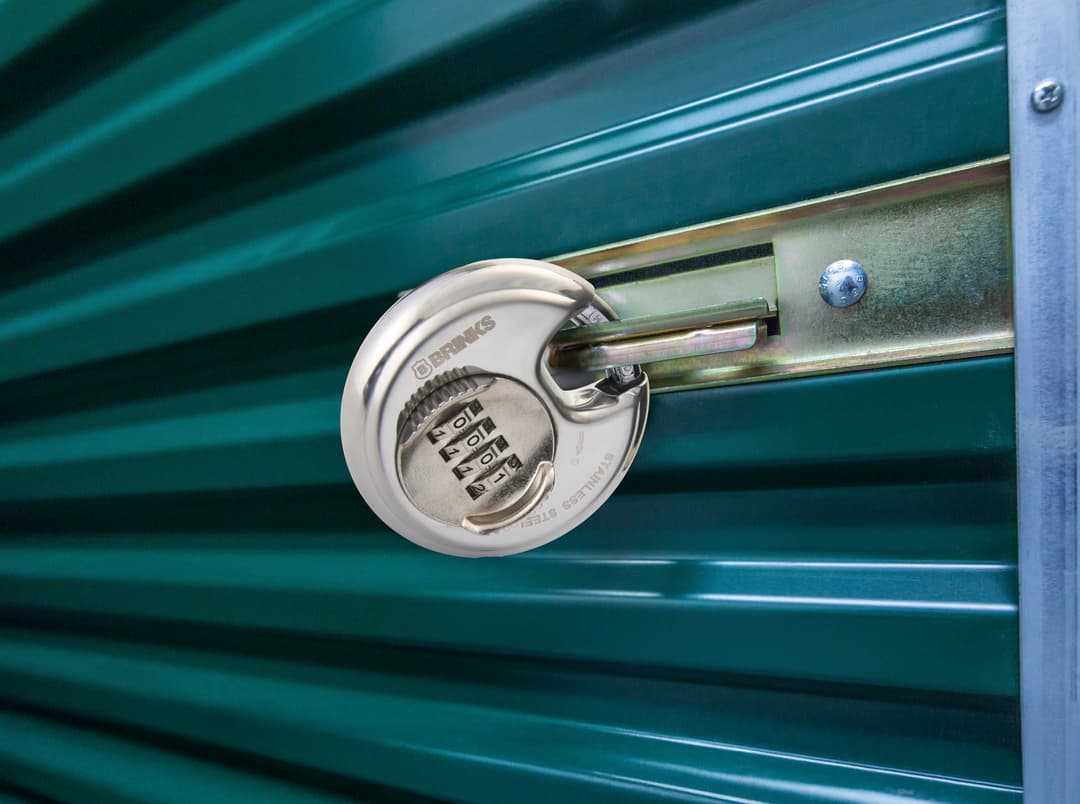
A discus lock, sometimes called a "round lock," is widely considered the best type of lock for self-storage units.
Its distinctive circular design leaves very little of the shackle exposed. Because bolt cutters require space around the shackle to operate, this design makes cutting significantly more difficult than with traditional padlocks.
Benefits of discus locks include:
- Extremely limited shackle exposure
- Excellent resistance to bolt cutter attacks
- Hardened steel construction
- Strong protection against prying
- Designed specifically for storage unit doors
Many storage facilities actually recommend—or require—discus locks because they offer one of the highest levels of physical security for roll-up storage doors.
If you're storing furniture, appliances, electronics, collectibles, or household belongings for the long-term, a discus lock is typically the best investment. Featured Brinks options include: 3-1/8 in. (80 mm) Stainless Steel Discus 4-Dial Resettable Combination Padlock 173-80051.
Shrouded-Shackle Padlocks: Maximum Physical Protection
Another excellent option is a shielded-shackle padlock.
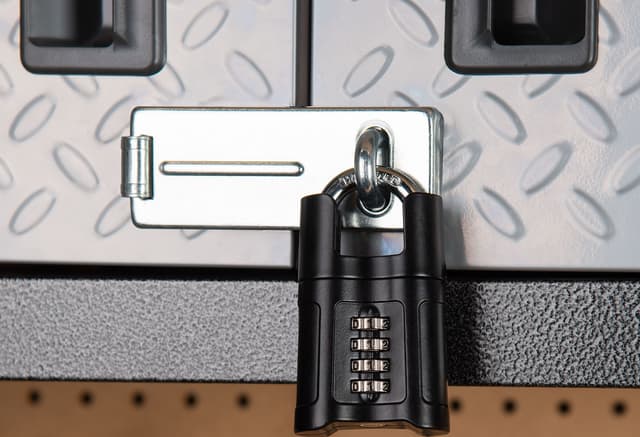
These locks feature heavy steel shoulders that surround and protect the shackle, making it extremely difficult for cutting tools to reach the metal.
Shielded-shackle padlocks are ideal when:
- You are storing expensive tools
- You have commercial inventory in storage
- You expect your belongings to remain in storage for extended periods
- Your storage facility is located in a higher-risk area
Because the shackle is recessed within the body of the lock, there is very little opportunity for bolt cutters or pry bars to gain leverage.
For customers seeking premium protection, shielded-shackle padlocks offer exceptional resistance against forced entry.
Featured Brinks options include: 57mm 4-Digit Resettable Steel Combination Padlock with 1in Shackle and Shrouded Guard 165-56601.
Standard Padlocks: Good for Some Applications
Traditional padlocks can still be suitable for storage units—but only when selected carefully.
The security of a standard padlock depends largely on:
- Shackle thickness
- Shackle material, such as hardened steel or boron shackle
- Shackle protection, including a covered or shorter shackle to reduce exposure
- Padlock body size
- Weather-resistant body materials with added protection from a jacket cover, or protective coating
- Overall build quality
Long-shackle padlocks can be useful when you need extra clearance for thicker chains, hasps, or longer flanges. However, for storage units, less exposed shackle generally means better protection against cutting and prying. If you choose a standard padlock, select the shortest shackle that properly fits the latch, with a strong shackle material such as hardened steel or boron for improved cut resistance. Featured Brinks options include: 44mm (1-3/4 in.) Laminated Steel Keyed Padlock with Weather-Resistant Cover, 1-1/8 in Shackle 642-44051.
Why Shackle Exposure Matters
One of the biggest factors in storage unit security is shackle exposure.
The shackle is the U-shaped metal loop that passes through the storage unit latch. The more shackle that is exposed, the easier it is for thieves to position cutting tools around it.
More exposed shackle means:
- Easier access for bolt cutters
- More leverage for pry attacks
- Greater vulnerability
Less exposed shackle means:
- Harder to reach with cutting tools
- Less room for leverage
- Better overall physical security
This is exactly why discus locks and shielded-shackle locks are considered the gold standard for self-storage.
Weather Resistance Is More Important Than Many People Realize
Storage unit locks spend nearly all their lives outdoors.
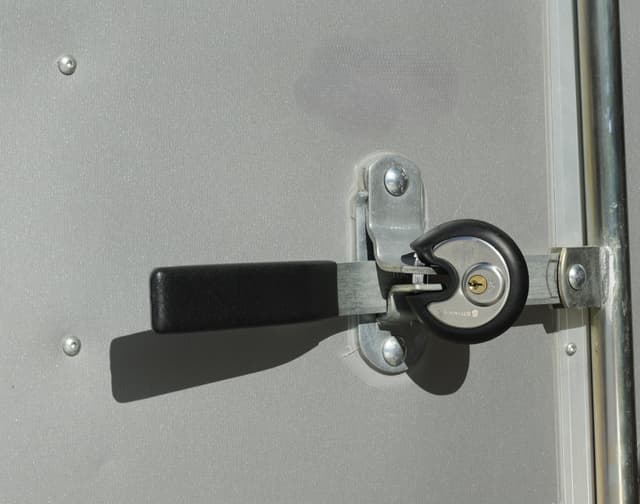
Rain, snow, humidity, coastal air, dust, and temperature swings can all affect a lock's performance over time.
Look for locks that feature:
- Corrosion-resistant finishes
- Stainless steel or chrome-plated components
- Weather-resistant keyways for added outdoor protection
- Durable internal mechanisms
A lock that resists corrosion is less likely to seize, making it easier to access your belongings months—or even years—after placing them into storage.
Does Your Storage Facility Require a Specific Lock?
Before purchasing a lock, check with your storage facility.
Some facilities require:
- Discus locks only
- Maximum shackle diameter
- Minimum shackle diameter
- Cylinder-style locks
- Approved lock brands
Modern storage facilities often use recessed latch systems specifically designed to work with discus locks.
Purchasing the wrong size or style could mean making another trip before you can secure your unit.
Choose Your Lock Based on What You're Storing
The level of security you need should match the value—and importance—of what's inside your storage unit.
Everyday Household Items
If you're storing seasonal decorations, clothing, or inexpensive furniture, a quality hardened steel padlock may provide appropriate protection.
Moving and Temporary Storage
For short-term storage during a move, a discus lock offers excellent protection while remaining easy to use.
Electronics and Appliances
Televisions, computers, gaming systems, and appliances represent attractive targets for thieves. A discus lock or shielded-shackle padlock provides stronger protection against cutting attacks.
Business Inventory
Contractors, small businesses, and online sellers often store tools, inventory, equipment, or supplies in storage units.
For these higher-value contents, choose the strongest lock your facility allows—preferably a shielded-shackle or premium discus lock high-security, pick resistant cylinder.
Family Heirlooms and Sentimental Belongings
Some possessions simply can't be replaced.
Photographs, keepsakes, antiques, collectibles, and inherited items deserve maximum protection, even if their financial value isn't the highest.
Choosing a premium security lock provides added peace of mind.
Additional Storage Unit Security Tips
Your lock is only one part of protecting your belongings.
You can further improve security by:
- Keeping valuables out of sight inside the unit
- Creating an inventory of stored items
- Using shelving to keep items off the floor
- Purchasing storage insurance if appropriate
- Visiting your unit periodically
- Choosing facilities with cameras, lighting, and controlled access
Layered security always provides better protection than relying on a single measure.
Why Brinks Locks Are Built for Storage Security
When it comes to protecting what's important, Brinks has spent decades building products designed to stand up to real-world threats.
Brinks storage security products are engineered with features such as:
- Hardened steel construction
- Cut-resistant shackles
- Pick-resistant locking mechanisms
- Weather-resistant finishes
- Durable designs built for long-term outdoor use
Whether you're storing household belongings for a few months or valuable equipment for years, choosing the right lock helps ensure your possessions remain protected.
Frequently Asked Questions
- What is the best lock for a storage unit?
- For most self-storage units, a discus lock is considered the best choice because its circular design leaves very little exposed shackle, making it much more difficult to cut with bolt cutters.
- Are discus locks more secure than standard padlocks?
- In many storage applications, yes. Their design significantly limits access to the shackle, providing greater resistance against common forced-entry attacks.
- What size padlock should I use for a storage unit?
- Always check your storage facility's requirements before purchasing a lock. Many facilities specify acceptable shackle diameters or recommend discus locks designed to fit their latch systems.
- Can a storage unit lock rust?
- Yes. Because storage locks are exposed to the elements, choosing a lock with corrosion-resistant materials and weather-resistant construction helps ensure reliable performance over time.
- Should I buy the most expensive lock available?
- Not necessarily. Choose a lock that matches both the value of your stored belongings and the level of security your facility requires. For higher-value items, investing in a premium security lock is generally worthwhile.
Protect What Matters Most
A storage unit is meant to provide peace of mind—not uncertainty. Choosing the right lock is one of the simplest and most effective ways to help protect your belongings from theft and unauthorized access.
Whether you select a discus lock, a shielded-shackle padlock, or another high-security option, look for durable construction, minimal shackle exposure, weather resistance, and a trusted brand with a long history of protecting homes and property.
Because when what you're storing matters, your lock should be built to help protect it.